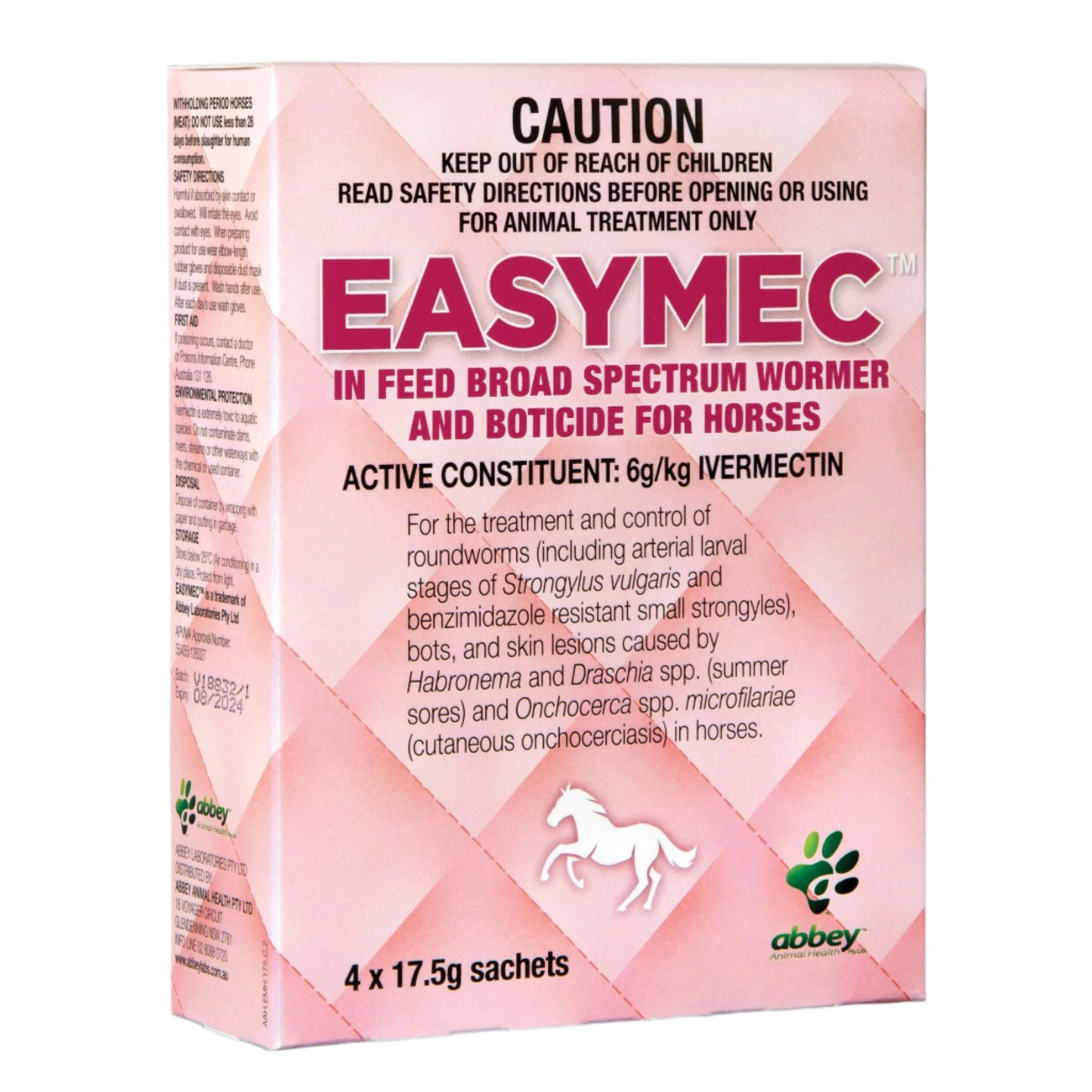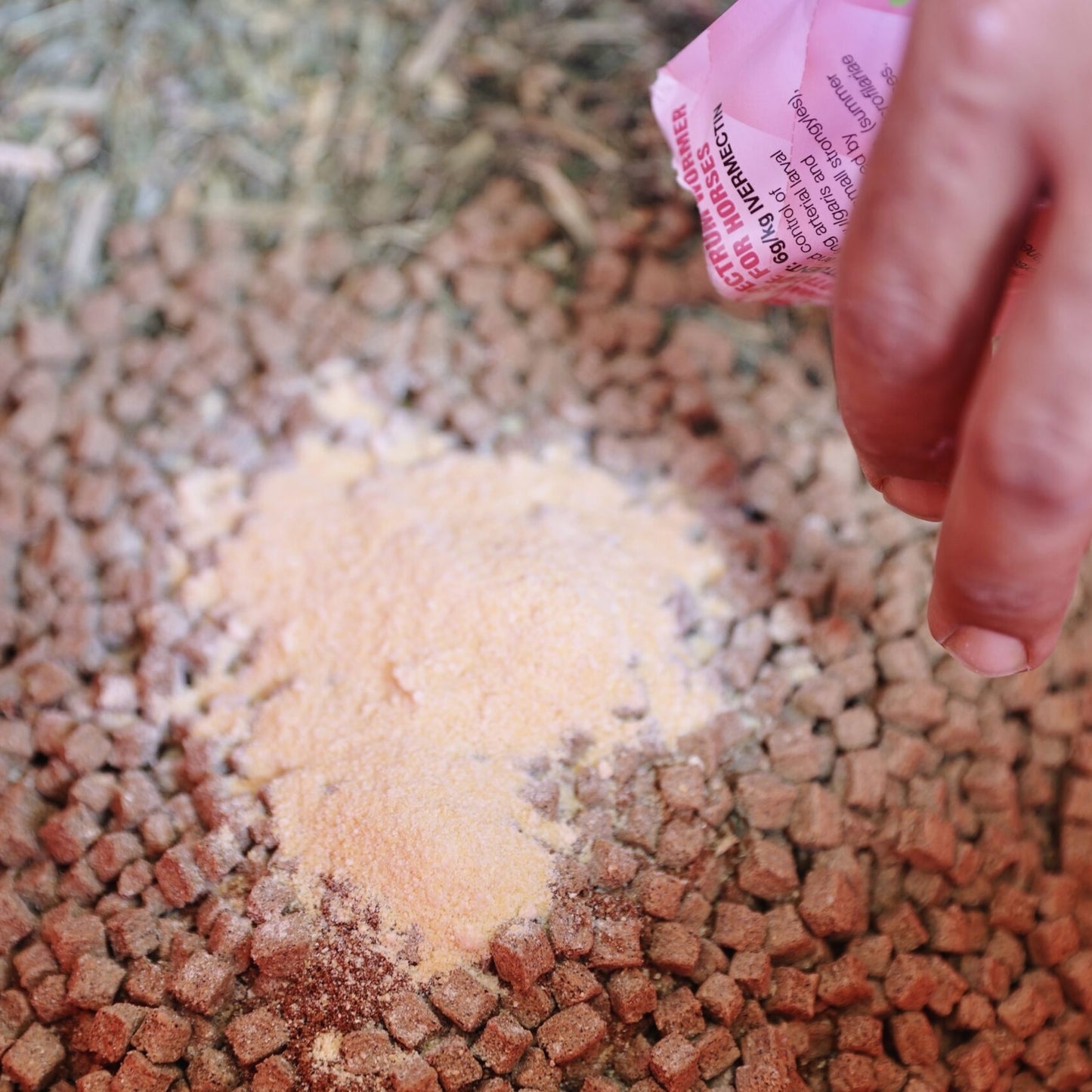


EASYMEC
EASYMEC
Broad-Spectrum Horse Wormer
For the treatment and control of susceptible roundworms, bots and specified parasite-associated skin lesions in horses.
This broad-spectrum equine wormer is formulated for the treatment and control of important internal parasites in horses, including roundworms, bots and susceptible parasites associated with summer sores and cutaneous onchocerciasis.
It also provides control of specified benzimidazole-resistant small strongyles, making it a useful option within an appropriate equine parasite-management program.
Key Benefits
- Broad-spectrum parasite control for horses
- Treats and controls susceptible roundworms
- Controls arterial larval stages of Strongylus vulgaris
- Controls specified benzimidazole-resistant small strongyles
- Controls susceptible bots
- Controls specified parasites associated with summer sores
- Controls Onchocerca spp. microfilariae associated with cutaneous onchocerciasis
- Suitable for incorporation into a strategic horse worming program
Parasite Coverage
Roundworms
For the treatment and control of susceptible equine roundworms, including important large and small strongyle species.
Large Strongyles
Controls susceptible stages including the arterial larval stages of Strongylus vulgaris.
Small Strongyles
Controls susceptible small strongyles, including specified benzimidazole-resistant strains.
Bots
Provides control of susceptible bot stages in horses.
Summer Sores
Controls susceptible Habronema and Draschia spp. associated with parasitic skin lesions commonly known as summer sores.
Cutaneous Onchocerciasis
Controls Onchocerca spp. microfilariae associated with cutaneous onchocerciasis.
Responsible Parasite Control
A strategic worming program should consider more than simply treating horses at fixed intervals.
Where appropriate, parasite management can include:
- Faecal egg counts
- Accurate dosing according to bodyweight
- Pasture and manure management
- Consideration of the horse's age and health
- Previous worming history
- Local parasite risks
- Anthelmintic resistance patterns
Faecal egg counts are useful for monitoring many gastrointestinal parasites, although they do not provide reliable information about every parasite or life stage, including bots and some migrating or encysted stages.
Important Information
Use strictly according to the current registered product label, including the recommended dose, administration instructions, contraindications, safety directions and withholding periods.
Accurate bodyweight estimation is important, as underdosing may reduce treatment effectiveness and contribute to the development of anthelmintic resistance.
Persistent skin lesions should not automatically be assumed to be summer sores or cutaneous onchocerciasis. Similar-looking lesions can have other causes and should be assessed by a veterinarian, particularly if they are enlarging, infected, painful or slow to heal.
For horses with suspected heavy parasite burdens, recurrent colic, unexplained weight loss, diarrhoea or persistent poor condition, seek veterinary advice.
$30.20
Couldn't load pickup availability